Showing posts with label cats. Show all posts

Sunday, September 25, 2016

Shelter

One thing I haven't talked much about on this blog since its inception is my video game habit, but I am in fact a gamer (PC master race) and every once in a while something pops up that catches my attention.  A bit over a year ago Might & Delight of Stockholm became my new favourite indie developer because they gave me a game that was not only enjoyable but did things that I feel really broke barriers, and some of those barriers are things that might be relevant for this outlet.

Image result for shelter might and delight
Shelter

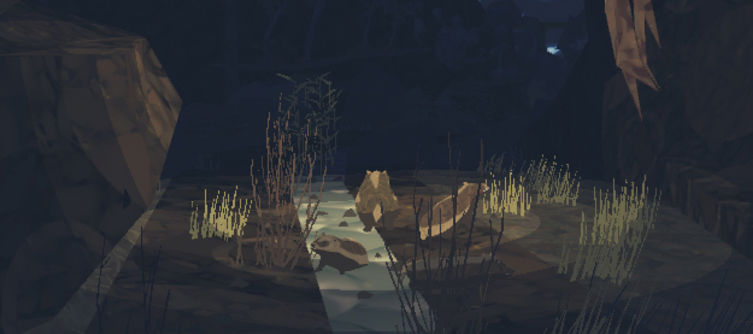
Three games comprise the Shelter series, but they all have a few things in common.  Shelter puts you in the shovel-esque paws of a mother badger, beginning underground in her set with her newborn young, which you are charged with feeding, protecting, and leading through a world of hazards ranging from flash floods to forest fires to dreaded birds of prey.  Shelter 2, my personal favourite, has you instead as a mother lynx in a huge, open environment, hunting for your kittens and once more shielding them from predators and the everyday (and perhaps not-so-everyday) risks of being a young animal in a big new world.  Paws is a spin-off of Shelter 2 in which you play not as the mother lynx but as a kitten who has lost their way.  It's more exploration-focused and whimsical, but retains the simple but ironically philosophical outlook.


Image result for shelter 2
Shelter 2

Each game focuses on the interplay between mother and young, and bonds formed through hardship.  Hardly a word is written in the game and there is no dialogue; no humans exist in the Shelter world, but all the same it's almost impossible not to feel a rather intense affection for these furballs you have been charged with, and the resulting blow to the upper-left of your chest when one of them shrieks their dying cry as they're carted off by a fox that you should have noticed, should have caught — but didn't.  To help along this paradoxically meditative and dire plot, each game has extraordinary simple but beautiful acoustic soundtracks and a papier mâché aesthetic.

Image result for shelter 2 paws
Paws: A Shelter 2 Game

To me this visual style immediately struck me as being symbolic of how an animal might view this world that they live in: their sight is not as important to them as their feel of the world, so rather than the game allowing us to focus on each individual detail of each individual leaf, we're instead shown patterns, basic ways of interpreting trees and grass and mountains, even the fur patterns of our character's young.  This, and the lack of UI, and the use of auditory rather than visual cues for many challenges the games present really places the player in the mindset of the animal better than others with quadrupedal protagonists.

Of course the games aren't without their shortcomings, mostly technical, but I didn't want to make this post a full review, simply a recommendation and brief analysis of the feel that the Shelter series invokes as a whole.  I think if there's anyone, gamer or no (because they are very easy games to pick up), has found themselves curious about the simple but brutal world of wild animals, or considered the possibility of seeing existence through the biases of another species, or just wants a game that's simultaneously uncomplicated, challenging, and emotionally trying, do try these out.  They're inexpensive and available on Steam and on GOG.  And next month, a fourth game in the series, Meadow, is in the works and will be released next month.  You can bet I'm looking forward to it.

Sunday, June 26, 2016

For the Less Well-Adjusted Cats

I've helped quite a few consistently violent or anxious cats, and these two complaints are generally what non-cat-people, and frustrated cat people will cite as the reasons for their frustration.

Violent cats are on one hand easy to deal with because there is a single method that I've found works very well and doesn't need much adaptation.  Cats are violent for two reasons: first, because they feel they're playing.  Consider when a violent cat scratches, or grabs your arm to claw at it, what is your immediate reaction?  We're creatures of instinct, too, so naturally we pull away, try to get kitty off of us.  Think about the similarities between that action and the action of, say, a cat toy being tugged about in her claws.  To them, it's just another game, and being violent by nature with their non-lethal weapons, it's a fun one.  In order to curb this behaviour, you need to make it less fun.

The process is painful, but hear me out.  If kitty is clawing at you, regrab them — not hard, just essentially to fixate them on what they're doing, and also give them the very real sensation that you are definitely bigger than they are.  An interesting thing about the cat psyche is that they don't seem to register size when considering whom they can beat up.  That having been accomplished, you're going to let them continue clawing your arm.  This doesn't mean you shouldn't vocalize your discontent; enough "ow!" and "hey!", coupled with the grabbing, will have your cat stop.  She may look up to you, confused and embarrassed, or she may just get miffed that her tactics aren't working as they usually do, but at this point you'll be able to get her claws out of your skin and you'll keep her with you for a pet and cuddle, so long as she'll tolerate it.  This is simple operant conditioning, pairing the fun they usually have with something humiliating or uncomfortable, and then rewarding them for ceasing the humiliating and uncomfortable thing while simultaneously showing them another activity to enjoy with you.  The change will not happen overnight, and may take weeks, even months of this depending on the stubbornness of your cat, past trauma, intelligence, and your own skill, but I've seen it succeed many times.

The other reason cats are violent, though, is because they're afraid.  Generally, this takes a very different form, and rather than grabbing and clawing for long periods it's a quick grab and kick, usually with some angry vocalizations, or else just lashing out.  Acutely angry or afraid cats will often jump at faces.  While some cats that are playing may employ hit and run tactics, smacking or scratching you, and running away, only to come back and try the same thing again, angry or afraid cats will avoid you if they can.  If this is the reason for your cat's violence, you need to get them into a comfortable situation in which they won't have a choice but to be with you.

This is also the treatment for anxious cats that I've found works well: Live intensely with your cat for a period of time.  That is, keep her in your room with good food, water, litter pan, cushions, catnip, and anything else that might help them feel comfortable, except for hiding places.  The reasoning behind anxiety in both cats and humans is ultimately the same: we have a stimulus that gives us anxiety and our escape from that stimulus exacerbates it, because we are conditioning ourselves to fear it more.  Cats are very, very good at escape, so they are very good at being anxious.  In this treatment, you are preventing your cat from escaping you.  It may be extremely traumatic for them; depending on their level of anxiety, usually past abuse, she may hiss and spit every time you move, search desperately for an escape route, even urinate on the floor, but you need to be consistent and give your cat as much attention as you can while still attending your basic human needs likely for several days on end.  Over time, and the key term here is graduated exposure, try to pet and cuddle her; like with the violence-for-play method, when she lashes out at you, however much you may bleed, just let her until you can scritch her ears, hold her, or find some other way of making her feel physically good, which will calm her down.  Ideally, only let her go when she seems calm, and wants to get to a different spot for her own comfort rather than because she's afraid, although you may have to try a few times to get to this level.  If you are not able to, ensure your cat is not getting away from you because she escaped; rather, be sure it's on equal terms.  For instance, you may reach out to pet her and she may jump at your hand and slash it immediately, backing away and snarling.  You want to continue advancing in this case, and just get to the point where you can gently scritch her cheek, and then move away, having succeeded in your goal.  There's a lot of sacrifice to be made here in terms of your own physical pain and scarring, but you retreating from her self-defence is just another form of letting her escape and build her anxiety further.  Throughout the entire process you want to be very verbal with your cat, using a sweet, soft tone.  This ultimately may sound borderline psychologically abusive, and you definitely need to have the heart for it, but this exposure is crucial.  Ideally, you want to keep this up until kitty can lie contentedly on your bed as you get into it, and visibly appreciate petting without any violent preamble.

Cats are an enigmatic species; we've lived with them for thousands of years and we still don't quite understand them.  And they like it that way, being the shy kid in the back of the room that no one quite gets and fewer people still will even try.  But as people who love our cats it's our duty to understand them whether they help us along or not, to develop that relationship between cat and human, and make their lives as happy as they can be.  Best of luck.

Sunday, June 19, 2016

Cat Communication

In general, people don't bother with their cats too much.  It sounds very distasteful to say, but it's true: We think of our cats as rather asocial animals, who can generally take or leave us, and when they take us they may well just leave us three minutes later, until the next time we're busy enough that we're worth bothering.  Cats are assholes, we say.

I, obviously, feel very strongly against this.  Cats can be very sociable, loving, even needy as any dog you might find if they're given the attention and the respect, and their communicative needs are met.  Dogs, though they aren't anymore, originally came from pack animals, and are still naturally more gregarious than cats are.  We, as humans, can sympathize with this, and so we have an easier time communicating with them.  Cats, on the other hand, are nocturnal, less interested in consistent, close proximity, and prefer the one on one.  This doesn't mean they have fewer social needs, only that their social needs are different.  They're the introverts of the animal world, and a common misconception about introversion is that it means you simply don't like people.  Introverts don't like crowds, don't like strangers, but the few people that they do like they become very attached to, and require them in their lives more than extroverts might rely on their own friends.  Cats are like this.

So no, don't assume kitty is fine if you leave home for a week and they have no one to interact with.  You may come home and they seem to ignore you, but this is because cats have a more complex social mind in some ways in comparison to dogs: they have the capability to quietly resent, they are vengeful, they can be embarrassed.  Have you ever seen kitty do something stupid, like slip across a kitchen floor chasing a bug only to collide with a counter, and you laugh, and they stalk off to face away from you, licking themselves?  Their humiliation looks a lot like ours, and so do their feelings of being abandoned.  They haven't forgotten you when you get home after that long trip, they just aren't very happy that you left them alone in the first place.  Cats isolating themselves, whether in humiliation or sickness or other upset, is a survival mechanism.

Cats also listen very attentively to verbal communication.  Like the other forms of concealment or deceit listed above, they often know very well what we want them to do or are telling them, but ignore us intentionally.  If one develops a strong relationship with a cat, they may well tear this barrier down, as my own has, and react to your wants and needs almost implicitly.  In return, cats also have a huge range of their own verbal expressions, highlighting how important verbalization is to them.  The more you talk to your cat, the more they'll talk back!

Cats have somewhere between thirty and upwards of one hundred distinct vocalizations, depending on one's source.  This is actually far more than dogs have, which is somewhere in the teens.  For comparison, the greatest number of distinct sounds in a human language is 141 at most.  Coupled with body language, this means a cat can express an awful lot with little effort.
  • A content cat will have her ears forward, her eyes almond-shaped, and her whiskers down and forward in what I like to call a 'cat smile', since like a human smile it uses muscles in the cheeks.  The tail will be relatively still, perhaps just flicking at the tip, back and forth like a pendulum.  Content cats obviously will purr, but if you're talking to them and petting them, especially if they're pacing about while you do so so that you can get to their favourite places, they may give short little chirping noises or bubbling sounds from their throat.  A very good way to see a content cat though, apart from all this, is the slow-blink.  A lot of people see this as them being snobby, and in humans this is a rather self-important expression, but in cats they're telling you that they're happy where they are and they appreciate your presence.  Cats will also rub against things when they're happy, and contrary to popular belief, this isn't them declaring your desk or your leg as their property, it's just communication like everything else.
  • An excited cat will have a more rapidly flicking tail.  People usually note that an active tail in a cat generally means they're annoyed or angry, but an excited cat's tail may be all over the place as well.  She'll be moving around a lot more, and may even look agitated, but the facial expression will mirror their content state, especially in the ears and the whiskers.  She may vocalize much more, especially if you're vocalizing back to her, with loud purring and meowing.
  • An annoyed cat will be making very few vocalizations at all.  She'll have her back to you, perhaps her ears back so that she can hear what you're doing.  Her whiskers will be pushed back as well, and her tail will be flicking.  In this state, it's best to just leave them alone; as humans, our natural response is to try to cheer them up, but they just want time to themselves.
  • An angry cat is easy to spot.  Ears back, whiskers back, hackles raised.  They'll snarl and hiss, and generally be very unpleasant.
  • A frightened cat is also easy noticed.  The facial expression will be similar to an angry one in that the ears and whiskers will be back, but the tail will be still, and the eyes will be wide.  A cat under consistent stress may actually purr, just as they do when they're injured.  Some have asked me before how one can tell between a purring happy cat or a purring, and it's all in their facial expression and their reaction to stimuli.  We all know what a cat looks like when she's enjoying being pet, curling her body against your hand; a frightened cat won't appreciate attention as overtly, although unless she bristles or moves away from you, comforting her is very advisable.
In general, the way you interact with a cat will be very different from how you interact with a dog or a person.  People often lament that they dislike cats but cats in houses always seem to like them; this is because cats enjoy being ignored.  Most cats don't enjoy intense physical attention, but even the most casual pet or ear-scritch can make them very happy; if she decides she wants to go somewhere else, do something else, don't follow her.  She'll come back on her own.  The petting may get more intense, and some cats love being brushed roughly, or having themselves underneath your body, making them feel loved and protected, but one way to almost always engage with your cat is just through verbalization.  If you observe cats in the wild, big or small, most of their interactions are very brief physical contact, along with quite a few more vocalizations, often at long distances apart.  Tell your cat her name in the right tone and you're guaranteed a cat-smile and a slow-blink.

Friday, July 12, 2013

Passion in the Desert

This film has been sitting in front of me literally for two years.  Has anyone ever put off seeing something so relevant to their interests for so long?  Why would I do that?  Quite simply, it's because I was introduced to the film via its Wikipedia entry, and I knew, for absolute certain after reading the plot synopsis, that I would cry at the end.

SPOILER WARNING!  Because this film is so very relevant to this blog's main topic, and because of my feelings about it, I'm not going to skirt around plot events, so if you haven't seen the film, want to see the film, and want things to be a surprise, read no further.  That having been said, if you want a plot synopsis, I recommend mine over Wikipedia's, which is incorrect in several parts and, frankly, very cold in the rest.

Also, I totally did cry at the end.


Passion in the Desert opens with relative innocence, taking place in Egypt as Napoleon Bonaparte's armies march across it in an effort to wrest it from the hands of the Arabs.  The protagonist is a French soldier by the name of Augustin Robert, who seems quite unremarkable apart from his current duty, which is to escort artist Jean-Michel Venture de Paris ("Venture"), who despite his name is most definitely from the Middle East and so is very mistrusted by the other French soldiers.

When one first sees the movie, one's inclined to think that this eccentric painter may be the focal point of the film: when the two are separated from their unit during a Mamaluk attack, he drives our poor protagonist half-mad with his obsessive depiction of the desert - the natural and cultural world of Egypt alike even as they try to survive in the desolate environment, climaxing when the old idiot uses the last of their drinking water to mix his paints.  Unable to continue, Venture stays behind at a pair of dead trees and, after being assured by Augustin that he'd be picked up once the soldier had found the Nile, promptly drinks down his paints with lead-induced ecstasy.

Augustin doesn't find the Nile, and as a consequence, those who are particularly fond of horses might want to be wary of a certain scene in which he is forced to put his steed down (at the same instant a giggling Venture does himself).  It's at this point the real crawling through the desert begins, until he finds a Bedouin camp.  He steals water from a veiled and beaded woman, whom in his delirium he believes a sorceress and does what any of us would do in his shoes: he quickly takes his knife to her hair and jets with the whole tribe in pursuit behind him.

He finds an ancient temple and hides there as night falls, and his superstitious assailants leave him to be picked clean by the jinn - malevolent spirits who appear as anything, from humans to animals to wisps of sand.  The concept of the jinn is one revisited throughout the film, particularly in animal form, to, of course, foreshadow our protagonist meeting one.

That is, as he turns in for the night, he finds himself bunking in the same sandstone room as a leopardess.  She ignores him entirely as he nearly wets himself and prepares for the inevitable confrontation.

It comes, but not to him: in the morning, when one of the Bedouins comes looking for him, sling in hand, the leopardess gives the Frenchman a nuzzle and goes out to hunt his attacker.  From this point on, we have a slow but steady movement from a supposed predator-prey relationship between Augustin and the cat, to the point that, in his hunger, he steals the remnants of a kill (a deer this time, to our relief) from her - which she is more than happy to share.

Before too many more cuts, we have the absolute sweetest scene I have ever seen in a film before: he's stroking this fully-grown leopard, to rubbing her ears, caressing her chest; she washes his hair and ears, then his face, and soon enough he's tossed away his inhibition and kisses her back - on the face, the lips, until he's cuddling her passionately and licking with his own tongue her head and neck.  The scene starts at 56:00 on the nose in the video above.

At this point, I found three things: firstly, that this is beyond doubt an art film.  Secondly, that I have just witnessed the most loving and honest zoophilic scene that I ever have in my life.  Thirdly, that I just witnessed said scene on a film that is an hour and a half long, has big-name reviews, and is available on DVD.

The rest of the film - a healthy portion - is about the energetic, loving relationship between soldier and leopardess (whom he calls Simoom).  For those wondering, there is never anything explicitly sexual between them, but a turning point in the film is when Augustin discovers Simoom playing and presumably mating (in what is at once a very catlike and very playful and humanly relatable fashion) and becomes visibly jealous.  She runs off, and in an effort to win back his lover her strips what's left of his uniform to decorate himself with mud and sand to look like, of course, a leopard.  It's difficult to say this while keeping a straight face, but even this scene is in my opinion done believably.  Most certainly it depicts the soldier's madness, but it's still not a madness that's depicted as explicitly negative.  It's a desperation that comes to a head when Augustin's unit enters the area, and the lovesick, rosetted soldier has to choose between his own kind and his feline companion as the former takes aim at the latter.  The tension ends with a boulder hurled at the young soldier's terrified skull and a snarl from a half-dressed Augustin to a cheery Simoom: "Where have you been?!"

Fed up, Augustin cleans himself up and dresses for the first time in however long, and prepares a makeshift rope to tie Simoom to a pillar as he makes his departure back to civilization, protesting to her that he does not want to be a deserter.  Simoom, however, takes offence that he'd desert her for his old comrades, breaks the rope and gives chase.  In his terror, realized from all that time before when he was certain Simoom would kill him, Augustin stabs his lover in the chest as she pounces on him, and kills her.  Horrified with himself and weeping terribly, he turns blankly to the desert, cradling the corpse of the leopardess in his arms, to aimlessly walk the sands until at last he collapses, thus ending the film.

There are some neat literary things done in this film.  The very veiled foreshadowing of the artist Venture's mania, love of the desert, and self-imposed death against Augustin's own madness, infatuation and (near) death in the end.  The dead pair of trees that they come to a second time, the use of jinn as a metaphor all lend themselves well to an art film.  And like its source, its finale very nicely symbolizes one of the most prominent tragedies: that of the conflict between love and mistrust.

I also appreciate the story itself, of course.  Some critics have rated it low because, as I've found in my life people are wont to do, they can't stand the idea that a human and a wild animal can get along.  From both personal experience and from stories like that of Kamunyak, I know that animals can have compassion for other creatures, sometimes without any clear reason, and sometimes even for animals they would normally be the enemy of.  I know at least someone is going to laugh at me for this, but I find the story to be wholly believable. (And it should be: the original short story was written by Balzac, who championed naturalism in writing).

The reason I want to talk about this here, though, is because of all the films, short and long, about zoophilia and zoosexuality that I've reviewed: A Tale of Forbidden Love, COMING SOON, and others that I haven't like Equus and Animal Passions, despite not even being a documentary it paints the most accurate portrait of zoophilia.  It doesn't play it for laughs like so many do, or demonize it like Equus does, or represent it as a cold sexual fetish as do COMING SOON and Animal Passions: it's a romance, and a beautiful one.  It doesn't anthropomorphize the animal but depicts the relationship in all its beauty as well as all its strangeness. Indeed, I also found it nearly unique in realistic animal films (Old Yeller, etc.) in how little it anthropomorphizes the actions of the central non-human: there's never even the classic confused head-cock.  Also interesting is that the animal (and the actor) are never computer-generated (though Simoom is played by two different cats, one of whom is actually male), so there's an earthy realism there even in production that's missing from so many modern films.

What all this means to me is that it's entirely possible for one to successfully depict zoophilia for the masses and do so successfully artistically while actually being fair to individuals like us who might just fall in love ourselves with the creature on-screen.  I'd highly recommend this film for any zoos or zoo-sympathizers out there; although an art film and a little slow at times, it was made with a lot of love (the director put $5 million in from her own pocket) and is truly a diamond in the rough.

And with that, here's hoping that we can find more beautiful depictions of interspecies romance out there, and that more will continue to be made.  Though I'm not sure if she will or won't appreciate the sentiment, Zoopoint salutes director/producer/writer Lavinia Currier for this lovely film.

Wednesday, August 22, 2012

Man vs. Wild?

I just finished watching a program that contained a refuge for ex-domesticated 'wild' animals.  Three people were in an enclosure feeding the inhabitants.  The narrator was going on about how quickly these animals can move and how the individuals needed to be constantly aware of where each animal was and be prepared to react.

The enclosure was home to four bobcat kittens.  They were about the size of your housecat and with the temperament of your typical semi-domestic apprehensive kitty.


This annoyed me, hopefully for obvious reasons.  As far as I know, there has never even been a bobcat attack on a human being in the wild.  Even in captivity I've never heard of a bobcat trying to eat a person, and sure as hell never a kitten.  But here are these so-called professionals tip-toeing around these babies as though they were afraid of waking up fully grown lions.

The same people go on to say that the most tragic thing about the refuge is that all the animals were once kept as pets.  I can agree with this to some extent, but to me, it's equally tragic that you, dear hostess, seem so fond of drawing such stark lines: if it's wild, it must be wild, and it's therefore so much more dangerous than anything manmade.

That's when the real problem arises.  We have such a divide from nature, and these folks see themselves as naturalists when all they are actually doing is pushing our species further and further away from considering itself a part of the natural world, and therefore devaluing what we see as the natural world - or in this case, perpetuating fear of it.  No one considers that puppy and kitty are descendants of wolves and wildcats that were adopted thousands of years ago by loons like me.

The tragedy expressed should be that there are people in the world who think it's perfectly OK to keep a leopard in their basement, or a hippo in their backyard.  Unlike our nomadic ancestors, we do not always have the luxury of space and ready-made habitat for our wild animal companions.  According to this show host, I imagine, this marks an impossibility, but clearly it is not: some of us do in fact have large tracts of property where certain animals that require a lot of land can be kept.  Some of us have the inclination to devote great amounts of time and money to those animals.

We see examples of this in the media, and it's not even hard to meet such people online: those who give their animals a lot of space, care for them, and have a very happy and healthy critter who adores them.  Smartly, these individuals do not tend to call their animals "pets" and advise others that just because they are doing it doesn't mean any joe can fork over a couple thousand dollars and stick a wolf in his living room.

Does it remain a bad thing simply because, as this hostess put it, it is "unnatural"?  As prone as I am to falling back to it, we know that this is a logical fallacy, so let's examine it more closely.  The main issue seems to be that there are a lot of people out there who are complete imbeciles and either don't know or don't care to know how to take care of a non-domesticated animal.  They are the problem.  Suppose the individual in question does know and happily applies their knowledge.  The animal is as happy and healthy as their domesticated counterparts, and likely much more so than their wild counterparts: we know that, while many animals are not naturally social, just from experience that even they do much better when they do have some mode of socialization.  Speaking with someone who raises leopards, he said to me that it is actually better to have two rather than one for just this reason.  They will also be more healthy, since they have a regular source of food, hopefully still of exercise (again, this comes down to knowing how to care for the animal), and have someone to care for them if they fall ill.

So if anything, there is an upside to these few individuals existing who have the capacity, both in terms of property and finances and in knowledge, as well as in inclination, to care for non-domestic animals: the animals are safer, better cared for, and happy.  The humans... well, we get one of the few life-lines we have to the natural world: something that says hey, wait a minute, just because it hasn't been hacked together using opposable thumbs doesn't mean it is strange and dangerous and must be avoided at all costs.  There are things we can learn from them, things we can learn about them in order to not only gain a better understanding of the animal but also of ourselves: where we come from, and where we fit in.  There is so much ignorance out there: I have even met a veterinarian that believes most mammals do not have a clitoris, because clearly God made man and gave him sexual pleasure, but not to other animals - process of sexual differentiation from clitoris to penis be damned. (Don't ask how we got to that conversation; it's not what you think.) And now I have come across someone who runs an animal refuge who thinks bobcat kittens are highly dangerous.  Let's get off of our high horse, people, and out from under our bedsheets and strive instead for a little more understanding here, shall we?

Friday, June 29, 2012

The Mish Posish

This post will contain some naughty pictures of animals.  It's nothing worse than you would see on a PG-rated production on the Discovery Channel, but if you're particularly sensitive on account of being on this blog, I totally understand.  If it makes you feel better, I find primates icky.

---

There's something I heard, again, a while ago that I kind of want to talk about now.  The first time I heard it, it was from a primatologist, and this statement is part of the reason I sometimes have difficulties with primatologists.  I have also seen it quoted online, though, in the years since bonobos became the animal of the day. (Now it's the honey badger.) The statement is, roughly, this: Bonobos are more sexually/interpersonally evolved than other animals on account of the fact that they have sex while facing each other.

Bonobos have only been identified as a species for a little over half a century or so, depending on who you ask.  They have only been intensely researched for a few decades.  Zoologists and comparative psychologists were of course astounded by the unique behaviour of the species: in contrast to their close chimpanzee relatives, they are quite nonviolent, females hold a lot of power, and they have lots and lots of crazy sex.  They have sex for many reasons: they have sex to calm everyone down, to build relations, or even to exchange favors.  They have sex with the opposite sex; they have sex with the same sex.  They have sex with their juveniles.  And, what was for some reason astonishing to researchers, they have sex in the missionary position.


The reason given was that because they are having intercourse face-on, it must add to the idea that sex in bonobos, like in humans and unlike in nearly every other animal, must play a very important social role and may even suggest a loving context.  After all, the face is the main outlet of emotion in primates, and we are a highly visual taxonomic order.  I say they are fascinated, "for some reason," though, because of this


this


and even this


Ignoring the fact that I probably have far too many pictures of lions at quick access, most ethologists would tell you that there isn't a whole lot going on between a male and female lion when they're doing their thing up to fifteen times a day.  Lions are also not terribly visual: they rely mostly on smell, like most mammals.  So what exactly is the deal here?

Well, as for why animals do it... we're not entirely sure.  Quite possibly, as it is with humans and weird positions, it's just a cool thing to do.  As for why some don't, though, or don't that often, it comes down to anatomy: if you've ever looked at a dog on his or her back, they're not quite as, erm, accessible as is a human on his or her back.  Any effort to make them more so would likely lead to at least some discomfort, particularly if you are a quadruped, with a quadrupedal spinal structure: you would need to have your entire body on top, pressing all the limbs that normally want to stick up back down, and things get way more complicated than is generally worth it.  In addition, a female is more prone on her back, and unable to escape.  A little more controversial, perhaps, but when you consider that rape seems much more common among apes, including humans, than quadrupeds, it may be that the missionary position developed to keep females safe and males "productive" among those species were rape is more frequent.

In any case, some primates in particular seem to have evolved towards the missionary position.  The spines of Old World apes are more erect.  Our limbs are very flexible.  Apart from humans, there is no animal that better exemplifies these crucial qualities than the bonobo.


On a side-note, and as an excuse for one more picture, have you ever wondered why human women have much larger breasts for their size than those of any other mammal?  It's not because of milk production: breast size has no impact on that.  It's not a conspiracy orchestrated by Playboy, either. (Or is it?) It's because they make a pretty great cushion in the missionary position, just as big butts do so in "doggy-style". (see Desmond Morris, The Naked Ape, 1967) And bonobos look to be heading in that direction.


So, is there something special about the missionary position?  Quite honestly, not one bit.  It's a side-effect of the anatomy that evolution has given us, and bonobos just happen to be on a similar pathway.  Sorry, bonobo fans.

Monday, May 28, 2012

Cat Sex

I was going to have this in the same article as last week's, but I decided against it for one very obvious reason.

This is definitely the steamiest post I have written here to date.  If you are not either zoo yourself or else are heavily desensitized to zoosexuality, please just skip this post.  It's for the zoos and the zoos alone.  Don't worry: I don't plan on making a habit of this, and we shall return to less romantic things next week.

---


Let’s give the queasy folks some space.  Here, I’ll be talking to you zoophiles who want to be more sexually intimate with your female cat but always heard it wasn’t possible, are afraid of doing it wrong, or have done it wrong.

Let me make it clear that penetrating your cat, male or female, does not work.  Don’t do it.  If you do, I will have to come to your place and shove a two-by-four up your ass, because that’s basically what it is.  What will be discussed here are tactile and oral stimulation.

Tactile stimulation – that is, fingering – is best done, in my experience, when kitty is lying on your chest and facing you, and you’re lying down.  This way, you can wrap your arms around her and be all romantic-like, and face her, and also keep an eye on her reactions because you are bigger than her and you don’t want to be making her uncomfortable.  This position also seems to be the most reassuring for your cat, who is given the real impression that she’s got the power here, and can leave whenever she likes - or lead you into a different position.  Mine will go from my belly to sprawling on her back on the floor to crouching with her butt on the air to crawling right back into my arms - important to remember throughout this article is that cats are all very different from one another and the best thing to have is a keen awareness of kitty's body language.

Before I go on, I'm going to assume you're a complete imbecile and tell you to ensure your hands are washed and clean.  So, first of all, regardless of what you're doing, foreplay is important.  It even occurs in nature, and it gets both of you ready both psychologically and physiologically.  Pet her, rub her, talk to her, give her her space for at least a few minutes.

It’s good to be petting/massaging/grabbing her scruff and scratching her rump simultaneously.  You can tickle the side of her tail to let her know what’s going on.  If she’s glad about that, her tail will be off to the side, her bum will be raised slightly, and her face will be a very happy one.  If you don’t know cat expressions, expect heavy eyelids and forward whiskers.

From here, your finger has access.  Which to use depends on how big your fingers are.  It’s best to start with the pinkie, because even it is going to be larger than a male cat’s phallus.  Experiment a little, though, very tentatively, because some queens like a bit of extra breadth.  Whichever finger you’re using, the rest of your hand should be relatively relaxed, wrapped comfortably around her rear, or over the base of her back.

What you are doing with that finger should be extremely tentative.  Because she’s on top, she actually has a lot of control, so starting out you really should be doing little more than just tickling her vagina.  Don’t do anything with the other opening unless she wants it, and she will show you this by moving it onto your hand.  Most cats don’t like it, and certainly not on the first time, and if you so much as brush it you’re going to be left alone on your couch or bed very quickly.  In any case, as you’re tickling, she may move back, she may move around, and your job is to exercise your empathic skills and get what she wants.  Does she want you to tickle lower?  Does she want you further in?  Zoophiles are some very empathetic people, according to one psychologist Beetz (2000), and this is why: we don’t have the luxury of someone telling us what to do while having sex, and we have very picky partners.

For this reason, don’t be upset if she leaves early.  Just stay put, or go the opposite direction as her.  You can see her again in a bit.  Don't worry about it.  A lot of cats will like to crawl around and stuff while having fun, and if you stay put or go she might immediately come after you wondering why you don't get the point.  In cases like these, you can chase her, put a bit of pressure on her back and continue on the ground.  As her arousal peaks you might find the almost masochistic resilience of a lot of female cats; some aren't satisfied towards the end of a round until you've got one hand massaging her neck and shoulders, and the other knuckling both holes as she holds her butt high in the air.

It’s kind of neat, because she knows exactly how to get you where she wants you to go, but if you actually try yourself, presuming she doesn’t hop away and hide, you’re never going to get there anyway.  She has the power, and inside you can feel her moistness, erogenous zones throbbing, her heart beating and her muscles drawing you in.  We don’t usually think of tactile stimulation as terribly romantic, but all this coupled with your other hand stroking her neck and back and her eyes gazing amorously into yours, it can be an incredibly rewarding experience.

Eventually, though, you’ll want to stop, or she will - if you’re good, and she’s having a good time, this might not be for a while - and after that, although you might think it best to give her a cuddle and mutter sweet nothings to her and all that, you actually want to leave her be for a bit.  You can sit around nearby, or even just stay right there, and she may well come back later from getting a drink to let you know that she appreciates it, whereas you might make her a little nervous and feel boxed in if you trail her or try to pet or cuddle her.  That’s just how cat sex works.  The moral to all of this is that everything is on her dime.

An interesting thing to note is that I know cats outside of heat, and even spayed females, who like a little tactile.  Of course, you have to be even more receptive and careful during this, but there can be mutual enjoyment even if hormones aren’t flowing.  I don’t believe I can in good conscience recommend this, because I just know some moron is going to read this and then think it’s A-OK to rape an undeveloped feline, but as a stupid youth I tried masturbating a spayed queen who belonged to my family.  She of course left, disgruntled, and I of course felt like absolute shit for not keeping my own hormones in check, this being at a time where I hated myself for even being zoophilic, let alone acting on it.  I left for a week, though, and when I saw her again, the first thing she did when I lay down on the couch was jump up on me and lower her bum right onto my hand, so we actually ended up developing something of a relationship.  Oddly, too, this little cat also liked her anus dealt with.  TMI, perhaps, but there’s a little story about cats and fingers.


Oral is tougher.  There are two ways I know of: either her planting her butt on top of your face, which seems to be something smart and forceful queens do, or else as she’s lying down on her side or belly (or back, or all over the damn room if she's like mine) and you’re lying next to her.  Anything else is too awkward, because she’s small and quadrupedal.  Many cats don’t want to have anything to do with oral.  And who can blame them, our mouths are disgusting.  Make sure to rinse very well.  And if your cat doesn’t want you going there, don’t go there.  Simple.  Maybe someday in the future.

Important: you should actually not brush your teeth or, for that matter, eat crunchy foods at all beforehand.  Either of these will cause tiny lacerations in your mouth which opens you both up to greater transmission of bacteria and other icky things.  I'm not saying this because oral sex with cats is particularly dangerous for either of you, I'm saying oral sex in general is kind of not really the most healthy thing you can do, even with humans.  So... if you're reading this and going, "Eh, I think I'll stick to humans," at least you can take home a lesson here.

Anyway, most of the things I say about tactile stimulation apply to oral as well.  To start, though, you want to give her a sniff.  This will not only let her know what’s up before anything actually happens, so she can decline if she likes, but it will also let you know what she smells like and are you sure you want to do this.  I would hazard that cats are... stronger than most women, although it’s just your tongue tip that’s going to have to deal with that, based on the fact that missing and accidentally getting her bum may be more palatable.  Fair warning given.  But of course, as I like to say, if you love someone, you love every bit of them: every way in which they stimulate your five senses.  So as bold adventurers, we press on.

I once read somewhere that if you want to become an expert cunning linguist, you can practice on a rose, trying not to ruin the flower.  If that’s the case for women, then perhaps we might say for a girlcat you might want to think of it as one of those tiny blue flowers.  Or foxglove. (I kid.) Cats are, as I have iterated, sensitive, and you just barely want to tickle to start out with.  You can eventually escalate, but do not expect to be able to shove your tongue anywhere.  If you’re using force, you’re using too much force.  And don’t forget to stroke her.


That’s all I have to say on cat sex, for now.  Hopefully you got something out of it.  And hopefully you didn’t get here by accident, ignored the warning above, and now look a little like this:


Now
Let's
Give
The
Rest
Of
The
Blog
Some
Space.

Good luck to you and yours.
Monday, May 21, 2012

How to Help Your Horny Girl Cat Without Being Gross


A little while ago I talked about neutering your pets, and specifically, why you shouldn’t do it.  It’s been one of my most successful posts so far, so I’m doing a bit of a follow-up.  In that post, I said that there are means of satiating your female cat who is in heat without being gross.

One thing to remember here, first of all, is that all cats are different.  There are differences in sensitivity, so yes, you’re going to have to be incredibly careful, very observant of responses, and willing to take some time to experiment.  One method or the other may not even work at all.  Just as importantly, kitty may not even want to have anything to do with you, period, in which case, you’re SOL.  Build your cat’s trust, spend some time with her, and then come back.

Assuming, though, your cat is OK with (or, more likely, is highly anticipating) your approaching her tail-end while she’s in heat, scratching her back… when you try petting her, especially if it’s her first heat, or you tend to avoid her while she’s in heat, or if she’s just that sort of cat, she may lash out at you.  This is pretty normal, so long as she doesn’t turn away and glare at you, in which case, yeah, trust, liking, etc.  More likely, though, she will immediately go back to flipping around and doing stupid horny cat things again.  She’s basically testing you, and you’ll need to persist a few times more in this case.  I can’t stress enough, though: if it’s clear she isn’t just testing you and seriously just wants to have nothing to do with you, see last paragraph.

The first method is beating your cat up.  OK, I’m joking, mostly.  It’s definitely the simplest of these two methods, the safest, and the most difficult to screw up.  Unfortunately, it doesn’t work with all cats, and it may take a bit of experimentation to figure out exactly how to do it.

What you’re doing is basically coming up behind kitty and petting her, quite heavily, starting from the neck and going down her back.  Always gravitate back to the neck; it’s sort of a universal cat fetish.  You’ll want to get more vigorous and putting more ‘petting energy’ into her lower back, where her tail starts.  Take it slow and take it easy; if she’s receptive, and you’re doing it right, she’ll present.

Still keeping a hand at or grabbing her neck, you sort of want to pulverize her bum.  Rhythmically pat her back and her hips.  You’re not doing anything with the business end she wants you to do things with, but what you are doing is you’re sending strong, rhythmic vibrations through those sensitive sexy areas, which is good enough for many cats.  Some cats prefer to be rubbed, so just kind of knead her hindquarters, though be careful because kitties in heat are... ahem, a tad messier than human women in heat, for their size, so a vigorous rub right over her backside might make this a certifiably "gross" method.  Just a warning.

In any case, she may orgasm or she may not, and I won’t describe it here because for our purposes it doesn’t matter a whole lot if she does.  What matters is that she’s satisfied and she’s quiet, and she’ll bounce off and do her cat thing.

You may be raising an eyebrow at this because patting her lower back and bum is something you might do regularly to kitty even if she, or even he, is not in heat.  Some cats like getting the crap beat out of their butt.  Yes, this is in fact because it is sexually stimulating.  If your cat likes this when she’s not in heat, chances are doing it with that extra bit of vigour will make her happy while she’s in heat.

The second method is the infamous q-tip method.  It’s definitely the grosser of the two methods I have labeled as non-gross, and it’s infamous because people are idiots and don’t do it properly.  Let’s make sure we know what we’re doing.  So… yeah.  Get a fresh q-tip.

Especially the first time, you’ll want to be doing something with the scruff of her neck.  Some cats, a vigorous little massage with your first two fingers will do fine.  Others, you’ll actually need to grab it, but don’t be too rough.  Either way, until things are finished, you’ll want to stick by that neck.  What you’re looking for is for her bum to come up and her tail to go to the side.  Yep, take a peek.

There are two orifices there.  I can’t believe I need to explain this, but experience with aforementioned idiots tells me I do.  The top one is cat-bum.  The chocolate starfish.  You’re familiar with this one, as it shows whenever kitty is feeling happy and energetic.  The bottom one is one you don’t see quite as often, and is maybe just a piece of discoloured fur anytime else.  This time, since she’s aroused, it’s a little more obviously cat-vag.  That’s the one you want to be looking at.

You’re going to be stimulating her with the q-tip.  Please, for the love of god, don’t just stick it in.  And oh dear really keep a freaking hold on it.  It’s not that hard.  Get a grip on yourself; you clean her urine and feces every day, you watch her washing yourself, you let her sleep on top of you.  This isn’t that weird or difficult, and it does not make you a zoophile or in any way perverted: you’re doing what needs to be done, you’re doing it in a healthy fashion, and you’re doing it because you love your cat and don’t believe in removing her semi-vital internal organs because you don’t like how loud she is.  Just thought I would remind you.  You’re welcome.

You want to just brush the q-tip around and over it.  She’ll get pretty visibly excited.  As you insert it – just a few millimeters is all you need, no further than the length of your index fingernail when it’s cut and probably a lot less – she may start to make noises that in other situations you might find distressing, and she may start to rock back and forth on her haunches.  This means you’re doing something right.  Not all cats do both or even either of these things, however, so just be aware of body language in general.

An alternative method to the q-tip, by the way, is just tapping her there with a finger.  Grosser, yes, but I thought I would point it out anyway.  Other than that, it’s the same method.  If she doesn't respond to that, gently using your knuckles and rubbing them up and down between her hindquarters (not all the way to her anus) as if strumming a very delicate guitar...with your knuckles...should work very well.  No, I'm not a guitarist.

However you do it, it will only probably take a few seconds, and what happens after is quite variable.  Kitty orgasms involve a whole lot of vibrating.  Eyes narrow, and there may be vocalizations, sucking, or just clicking noises like they make when they see a bird.  Alternatively, there may be no orgasm and she might just bounce off to do whatever.  Some cats, if you’re really doing a good job at making her feel comfortable, might last quite a bit longer and through multiple orgasms.  You can take this as either a good thing or a bad thing.

Either way, that’s finished.  No muss, no fuss.  Chuck the q-tip, enjoy the peace, and think about how happy your cat is right now.  Or just go and watch TV.

Saturday, March 17, 2012

Fixing Your Pets


This is a sticky topic with me, and one I have had to deal with recently, so I’m going to rant on it.  First of all, I do not believe in neutering your male or your female cats and dogs.  To a lot of people (see: just about everyone), this is a ludicrous thing to believe, partially because, like so many things, everyone does it, so it must be right.  However, there are arguments out there for neutering your animals.  In this article, I plan on addressing them, debunking them, and raising my own against them.

“It’s cruel to let your pet go through sex cycles.”

I find this patently silly simply because letting a universal and natural thing occur cannot by definition be cruel.  Even things that are, unlike sexual arousal, most certainly unpleasant, such as sadness, should be a part of an animal’s life.  At face value, we might say life would be better without sadness, but sadness fills a very important role in our lives as do all emotions – in this case, encouraging the strengthening of social relationships.

Most people who give this argument are talking about female cats.  They hear them yowling and see them rolling around the floor whilst in heat and think the poor kitty is in some sort of pain.  This is not so; they are merely trying to attract attention in the most overt way they can.  I know it’s a logical fallacy, but in this case it does ring true that if it’s natural, it’s probably good for you.  We believe ‘natural’ to be good when it comes to multivitamins and hair products, and even our pet food; why do we believe that ‘natural’ is bad for our animal’s body?

“It’s annoying!”

Once again, typically talking about females in heat.  This argument truly is cruel, as it implies that we should gladly subject an animal to a life-altering surgery simply because we find them obnoxious as they are now.  We had the same mentality when we used to give difficult mental in-patients frontal lobotomies.  While neutering is not as extreme, it is stressful for the animal and does alter them significantly both physically and psychologically, and to me, “I hate how much noise she makes” is not a good enough excuse for that.

There are ways to relieve your female animal, and I don’t just mean icky bedroom-type stuff that people like me do.  There are tutorials out there for cleanly doing so and also to control without the use of surgery or medications the frequency of heats.  And for those of you who are looking to get on your grumpy queen’s good side, this sort of relief is for them a lot like your giving them food: it’s a very quick way to get them to like you even more than they already do – which dropping them off at the veterinarian certainly will not.

“They pee where they shouldn’t.”

This can be trained out of an animal with relative ease, and neutering does not guarantee that it will cease.  I know that both male cats I have had that were neutered still squirted everywhere whenever they got a whiff of a newcomer, until I scared the tar out of them while they were in the act enough times that they got the picture.  Animals aren’t stupid, and like us and our inwardly driven habits, they can change much of their behaviour through… well, I’m not sure if stomping and yelling can be called therapy, but something like that.

“Isn’t it healthier to neuter my pet?”

Not really.  There are certain advantages, the obvious one being that your pet will not get cancer of the gonads and need to have them… uh… removed.  They will also be less susceptible to some diseases, poisoning, and fights with other animals, because they will be less active and roam less – and people who neuter their pets also tend to have indoor animals; there has yet to be a study that I have read that does not account for this fact.  The obvious solution is to keep an eye on your pet, and keep them indoors or to a restricted area, which you should be doing anyway since this is the law in many areas.  There is a significantly lower chance for a spayed female to develop breast cancer, and even then only if she is spayed before her first heat, but that is the only health benefit directly related to neutering that I have read.

On the other hand, pets who are neutered are at greater risk for obesity, and all the associated complications, even if they are allowed outdoors, simply because of that lack of activity.  They are also prone to bone problems, because sex hormones (both testosterone and estrogen) are crucial to bone development and upkeep.  Neutered animals are more prone to urinary problems, and although generalizable statements are difficult to make, they will also be more susceptible to certain infections and diseases due to the effect sex hormones, particularly estrogen, have on the immune system.  Neutered animals of both sexes, particularly dogs, are also more susceptible to cardiac tumours, cognitive decline, and hair loss.  Spayed females are at greater risk for hypothyroidism.  Castrated males are at greater risk for prostate cancer.

This would also be a good time to talk about your animal’s personality.  They lose a lot of that idiomatic flair that made them special, and that lovable energy.  People often neuter their pets and, as the last vestiges of their natural hormonal balance fade off, erroneously think their pet is ‘growing out of it’.  The fact that everyone neuters their animals nowadays makes this a difficult assumption to overcome.  Cats can be kittens, and dogs can be puppies if you leave them to be who they naturally are.

“The cat/dog population is already out of control; I don’t want to accidentally increase it.”

This is probably the best argument for neutering your pet.  If this is your only, or at least your chief motive to neuter your pet, there is an alternative option, and that is tubal ligation for females, or a vasectomy for males.  This does not impact the benefits of sex hormones on the animal, but it does prevent them from contributing to the gene pool.  It is also less dangerous; although neutering is quite easy and is the one operation that all vets are damn good at because they do it so often, there is still risk of infection or complication, especially when it comes to spaying (females).  This procedure involves the complete removal of the entire reproductive system.  It is not a minor surgery.


These are the main arguments that I can recall that I have heard for neutering.  If you find any more (or have any more), please put them in the comments or else email me them, and I will attempt to address them.  Hopefully, though, I have gone at least some way in convincing you with this short article.

Monday, January 30, 2012

Cats & Dogs


One suggestion I got recently was to talk about the differences between cats and dogs as far as how they interact with each other, and how we as the humans in their lives interact with them.  Now, I think this individual wanted more me to discuss why cats rule and dogs drool, but I am going to take a different approach and examine the different ways in which each species is intelligent, and what those forms of intelligence mean to us.

I’ll start with dogs, then, because dogs are the species that we are most familiar with.  We, as humanity, have been befriending, working with, and selectively breeding dogs (from the grey wolf) for potentially as long as 30,000 years.  They are the first animal we domesticated, and the closest from day one.  Many scientists believe that humans actually nursed wolf cubs in the early years of domestication (from Grandin, T. 2005. Animals In Translation, an excellent book regarding comparative psychology and sociology).  It’s really little wonder, then, that today we feel much more at home with dog emotions, whether they have become more like us or we have become more like them.

The first and most obvious similarity is that we are both highly social animals, and rely very heavily on each other and social hierarchies.  Contrary to popular belief, dogs do not view their owners as “the alpha” – the pack mentality was bred out of them long ago, and we can see this today in the looseness and disorganization of feral dogs descended from domestic breeds.  They do, however, tend to put a great deal of stock in our happiness as individuals that they cherish, and retain a great deal of the social intelligence of their lupine ancestors.

Some of this intelligence is in their willingness to display how they are feeling in terms that we understand.  Dogs use facial expression well, including using their eyes.  Perhaps ironically, though, while they have little qualms about being embarrassed or making mistakes that impact them personally, they are more likely to inhibit themselves if they feel it necessary for the happiness or agreement of their enigmatic human companions.  I want to write a significantly creepier article on this later, but for now, this means simply that we as human beings must not fall into the hole created by the dog’s usual openness, and learn to read the more subdued cues they give, especially when they are uncomfortable.

I want to talk about cats more, because cats are far more mysterious – and they seem to like it this way, so I apologize to any cats whose veils I am preparing now to lift.  This desire to not show certain aspects of themselves, particularly anything that may make them appear weak, is pervasive across all breeds and species.  Perhaps the most famous and distressful example of this is that cats will seek complete solitude when they are dying.  Many cat owners, even those who have not lost a pet, are aware of this solace-seeking behaviour when kitty is ill; she will hide beneath or behind a piece of furniture and not come out for anything, even if she has had no prior experience with the veterinarian.  The etiology of this behaviour is pure instinct: a cat that is ill does not want to bare herself in the open as an easy target, and it is instinctive behaviour like this that often separates them from dogs.

Cats have been domesticated for a long time, but not nearly as long as dogs – only at most 9,500 years ago.  More importantly, we have never become partnered with cats – apart from, on occasion, using them as hunting partners, and even in combat, we have mostly just kept them around the grain bins and barns to keep away rodents.  We give them a place to stay and a nice source of bait for their food, and they keep that bait from being eaten by their food.  Only relatively recently, mostly since the late Bronze Age according to region, have we done much for keeping them as vanity pets and companions.  It’s therefore little wonder that they have much more for instinct, and we understand them far less than we do dogs.

However, one can learn cat.  While cats are still so well tied to their feral nature that they can even be expected to survive in the wild if abandoned, they do have some surprising social skills.  Although they are not nearly as tightly-knit as wolf packs, cats do form small social groups that are mainly for collective hunting and protection of queens and kittens.  Cats also have a huge range of communicative abilities, but there are two difficulties that we have in interpreting them.  Firstly, their base level is the way that dogs are when they are concerned with your reaction.  They keep their emotions tight to the belt in order to not appear weak, until they are needed.  In short, they are the opposite of dogs in their expressiveness.  Secondly, their ways of expressing themselves are much more foreign to humans: rather than using the direction of their gaze or ecstatic activity that are very easy for us to interpret, they use their ears, whiskers, tails, eyelids, and very minute tactile methods of communication that we simply are not very well-acquainted with.  Someday, perhaps, I will talk about these as well in more detail, but the simple fact is that unlike both dogs and humans, they put a great deal more stock in hearing, smell, and tactile information (ie whiskers) than they do sight, which leads to differing forms of communication.

Due to both the historical nature of our relationship, then, and our varying methods of communication that neither side has a great deal of ease in understanding, we tend to assume that cats are less amiable or even less intelligent than are dogs, which is not true and is merely a gross oversimplification of the differences in their respective psychologies.  The last number of posts I have made, I have left the reader with an overarching message to chew on until next week, and I believe this is a fine time for that: each animal genus and even species has its own idiosyncrasies, intelligences, and methods of communication, and all are deserving of respect and striving towards understanding, even (especially) if we need to leave behind our human mindset.