I went ahead and saw The Shape of Water the other week and it seemed significant to me. Here we have a cast of protagonists: the first, a disabled individual, specifically a mute, talked down to for her disability, her humanity undermined, and her abilities underestimated. (And further someone whose socioeconomic class is discriminated against. Second, a gay man, whose social life and freedom are restricted for his sexuality. Third, a black woman, whose race is her primary limiter. And then fourth, we have a nonhuman, someone presented as an animal - who for all intents and purposes is an animal - who is the subject of all the injustices animals are often subject to.
And we have all of these people rising above, proving that they are worth more than they are given by heteronormative society in ability, intelligence, strength, and the ability to love. The Shape of Water is one of those unfortunate films that receives critical acclaim while being generally ignored in box offices, only playing in select theatres, and not even considered for annual awards (although it did take home one for its soundtrack). But if you want to point to Hollywood making one more step towards acknowledging and respecting human-animal relationships, this is a good one. Indeed, this is the first time I have seen a film glorify an explicitly sexual relationship between a human and something non-human very clearly pre-linguistic (at least expressively: he only makes single word utterances through ASL). Further, even when the protagonist describes this relationship in a rather explicit manner, no one takes issue with its interspecies nature.
Slowly, very slowly, zoophilia is peeking its way into accessible media and being portrayed as something beautiful, even if strange, and one more victim of a judgemental society. Go support this film if you get the chance, it's certainly worth it. Wonderful soundtrack, very daring depiction, well paced and with very real and flushed out characters that you can take home emotionally with you. Even for non zoos, of course, enjoy falling into, and even in love with, its weirdness.
One thing I haven't talked much about on this blog since its inception is my video game habit, but I am in fact a gamer (PC master race) and every once in a while something pops up that catches my attention. A bit over a year ago Might & Delight of Stockholmbecame my new favourite indie developer because they gave me a game that was not only enjoyable but did things that I feel really broke barriers, and some of those barriers are things that might be relevant for this outlet.
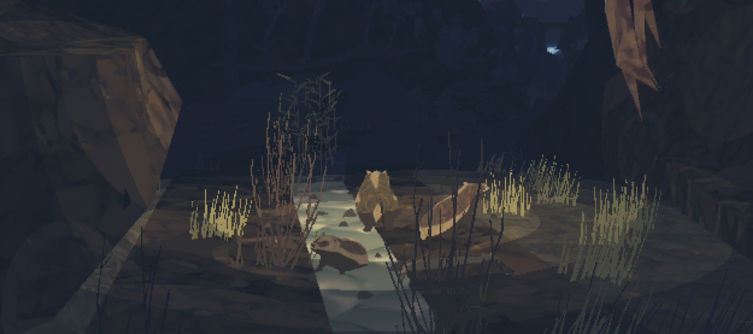
Shelter
Three games comprise the Shelter series, but they all have a few things in common. Shelter puts you in the shovel-esque paws of a mother badger, beginning underground in her set with her newborn young, which you are charged with feeding, protecting, and leading through a world of hazards ranging from flash floods to forest fires to dreaded birds of prey. Shelter 2, my personal favourite, has you instead as a mother lynx in a huge, open environment, hunting for your kittens and once more shielding them from predators and the everyday (and perhaps not-so-everyday) risks of being a young animal in a big new world. Paws is a spin-off of Shelter 2 in which you play not as the mother lynx but as a kitten who has lost their way. It's more exploration-focused and whimsical, but retains the simple but ironically philosophical outlook.
Shelter 2
Each game focuses on the interplay between mother and young, and bonds formed through hardship. Hardly a word is written in the game and there is no dialogue; no humans exist in the Shelter world, but all the same it's almost impossible not to feel a rather intense affection for these furballs you have been charged with, and the resulting blow to the upper-left of your chest when one of them shrieks their dying cry as they're carted off by a fox that you should have noticed, should have caught — but didn't. To help along this paradoxically meditative and dire plot, each game has extraordinary simple but beautiful acoustic soundtracks and a papier mâché aesthetic.
Paws: A Shelter 2 Game
To me this visual style immediately struck me as being symbolic of how an animal might view this world that they live in: their sight is not as important to them as their feel of the world, so rather than the game allowing us to focus on each individual detail of each individual leaf, we're instead shown patterns, basic ways of interpreting trees and grass and mountains, even the fur patterns of our character's young. This, and the lack of UI, and the use of auditory rather than visual cues for many challenges the games present really places the player in the mindset of the animal better than others with quadrupedal protagonists.
Of course the games aren't without their shortcomings, mostly technical, but I didn't want to make this post a full review, simply a recommendation and brief analysis of the feel that the Shelter series invokes as a whole. I think if there's anyone, gamer or no (because they are very easy games to pick up), has found themselves curious about the simple but brutal world of wild animals, or considered the possibility of seeing existence through the biases of another species, or just wants a game that's simultaneously uncomplicated, challenging, and emotionally trying, do try these out. They're inexpensive and available on Steam and on GOG. And next month, a fourth game in the series, Meadow, is in the works and will be released next month. You can bet I'm looking forward to it.
Equus is a play that was composed, like many strange and controversial pieces of media, in 1973. It follows a troubled teenage boy, repressed by his overly dogmatic upbringing, with his feelings for (or about) horses being central to the story and what it represents.
Like most fiction that deals with individuals with zoosexual proclivities, it primarily uses the attraction as fuel for metaphor. In this case, it's not so much about the perversion, as Alan, the protagonist, never does interact in a sexually explicit way with any horses, but as a representation of something that he has been prevented from, and ultimately an object of worship (as these two things are consistently linked in the play).
I don't want to discuss the literary elements of the play, although they are definitely here, because I feel it's very dishonest in a lot of ways. It's dishonest scientifically, being one more piece to add to the heap of ones that depict hypnosis for enhanced recall as a valid practice. And it's dishonest in its message, as it opens with the psychiatrist, Dysart, giving the audience the very 70s notion that we perhaps should not be treating troubled teens for fear of giving them "boring" lives in place of their disordered ones, and Dysart remaining a positive and moral figure throughout the play, even to the mutilation in the end. The message is clearly throughout the play meant to be about how Alan has it right, and is just the victim of the tug of war between militant atheism and fear-based evangelism while trying, and being prevented from, finding his own spirituality and worship, naturally tied into sexuality. But it ends with the real-life inspiration for the play, in which he mutilates the object of his worship, and still our benevolent psychiatrist laments that he may yet cure the boy, as if his insanity may still be preferable to a healthy life.
It's dishonest, of course, about zoophilia as well. Although it is a play meant for a then-modern audience, and its depicted zoosexuality is meant only as a literary element, it still insists upon depicting those with similar feelings about horses as troubled monsters just beneath the skin. The constant shouts and whooping of Alan whenever he comes into contact with them, be it during the nude moonlit ride or the actual blinding of the stabled horses, gives us the impression that while the human side of his sexuality is troubled, and he's socially inept, and he has a horrible, mentally abusive relationship with his parents, the most salient disturbance about him is how he feels about these animals.
I don't believe anyone who knows how the play ends would see this play as a good one to suggest to a zoophile anyway, but as it was quite successful and even has a modern film adaptation, to me its dishonesty is worth noting here. And we as the zoo community can use this dishonesty to open up a window into the minds of those who don't quite understand us, perhaps don't even realize we exist. That's important when we're looking into acceptance.
Time for another review! And finally, it's a good one: This is an excellent book I have for some reason never been aware of until now. It's a Canadian piece written in the 70s by second-wave feminist Marian Engel about a Toronto women made to live out in the boondocks, where she meets and eventually falls in love with — you guessed it — a tame bear.
First of all, let me get the not-so-zoo stuff out of the way: It's a really well-written book. At first it may come across as a bit purple; it starts with the same tired and frustrated young city woman undergoing major changes in her life. The author does this on purpose, saying that she originally just wanted to write pornography, and then a bear came into the picture so she went with it, in typical style of writers. But it picks up, and a nice array of literary tools are used throughout the story to deliver a strong message just beneath the surface of the plot regarding the liberation of women's sexuality, and outside the sphere of feminism (or is it?) the rediscovery of what is natural and wild, beyond the scope of the niches society fits us into.
Some critics have toted it as a very spiritual book, but to me it's quite the opposite: with its length and its style, it reads like a significantly less chaste Paulo Coelho, but it actually paints a rather believable and down to earth story. If anything it's about pulling the wool away from one's eyes and just embracing the simple, almost a sort of nihilism, rather than a spiritual feeling or doctrine.
That realism extends to the zoophilic aspect, too: the bear's actions are in my experience very believable, right up to the ending, if not tragic then simultaneously disappointing and liberating in all the best ways. It doesn't ever disparage or abuse, and indeed even glorifies the zoophilic actions and feelings at hand, and really, I think some of us zoos could learn a thing or two about our relationships with animals from this book, and help bring us into a more moderate state of mind.
I really can't recommend this book strongly enough, not only to zoophiles but also to feminists, real libertarians, and anyone who enjoys good literature. It's erotic, but doesn't revel in it, and instead uses that eroticism to teach us things about our own existence and personal liberation in measure.
This film has been sitting in front of me literally for two years. Has anyone ever put off seeing something so relevant to their interests for so long? Why would I do that? Quite simply, it's because I was introduced to the film via its Wikipedia entry, and I knew, for absolute certain after reading the plot synopsis, that I would cry at the end.
SPOILER WARNING! Because this film is so very relevant to this blog's main topic, and because of my feelings about it, I'm not going to skirt around plot events, so if you haven't seen the film, want to see the film, and want things to be a surprise, read no further. That having been said, if you want a plot synopsis, I recommend mine over Wikipedia's, which is incorrect in several parts and, frankly, very cold in the rest.
Also, I totally did cry at the end.
Passion in the Desert opens with relative innocence, taking place in Egypt as Napoleon Bonaparte's armies march across it in an effort to wrest it from the hands of the Arabs. The protagonist is a French soldier by the name of Augustin Robert, who seems quite unremarkable apart from his current duty, which is to escort artist Jean-Michel Venture de Paris ("Venture"), who despite his name is most definitely from the Middle East and so is very mistrusted by the other French soldiers.
When one first sees the movie, one's inclined to think that this eccentric painter may be the focal point of the film: when the two are separated from their unit during a Mamaluk attack, he drives our poor protagonist half-mad with his obsessive depiction of the desert - the natural and cultural world of Egypt alike even as they try to survive in the desolate environment, climaxing when the old idiot uses the last of their drinking water to mix his paints. Unable to continue, Venture stays behind at a pair of dead trees and, after being assured by Augustin that he'd be picked up once the soldier had found the Nile, promptly drinks down his paints with lead-induced ecstasy.
Augustin doesn't find the Nile, and as a consequence, those who are particularly fond of horses might want to be wary of a certain scene in which he is forced to put his steed down (at the same instant a giggling Venture does himself). It's at this point the real crawling through the desert begins, until he finds a Bedouin camp. He steals water from a veiled and beaded woman, whom in his delirium he believes a sorceress and does what any of us would do in his shoes: he quickly takes his knife to her hair and jets with the whole tribe in pursuit behind him.
He finds an ancient temple and hides there as night falls, and his superstitious assailants leave him to be picked clean by the jinn - malevolent spirits who appear as anything, from humans to animals to wisps of sand. The concept of the jinn is one revisited throughout the film, particularly in animal form, to, of course, foreshadow our protagonist meeting one.
That is, as he turns in for the night, he finds himself bunking in the same sandstone room as a leopardess. She ignores him entirely as he nearly wets himself and prepares for the inevitable confrontation.
It comes, but not to him: in the morning, when one of the Bedouins comes looking for him, sling in hand, the leopardess gives the Frenchman a nuzzle and goes out to hunt his attacker. From this point on, we have a slow but steady movement from a supposed predator-prey relationship between Augustin and the cat, to the point that, in his hunger, he steals the remnants of a kill (a deer this time, to our relief) from her - which she is more than happy to share.
Before too many more cuts, we have the absolute sweetest scene I have ever seen in a film before: he's stroking this fully-grown leopard, to rubbing her ears, caressing her chest; she washes his hair and ears, then his face, and soon enough he's tossed away his inhibition and kisses her back - on the face, the lips, until he's cuddling her passionately and licking with his own tongue her head and neck. The scene starts at 56:00 on the nose in the video above.
At this point, I found three things: firstly, that this is beyond doubt an art film. Secondly, that I have just witnessed the most loving and honest zoophilic scene that I ever have in my life. Thirdly, that I just witnessed said scene on a film that is an hour and a half long, has big-name reviews, and is available on DVD.
The rest of the film - a healthy portion - is about the energetic, loving relationship between soldier and leopardess (whom he calls Simoom). For those wondering, there is never anything explicitly sexual between them, but a turning point in the film is when Augustin discovers Simoom playing and presumably mating (in what is at once a very catlike and very playful and humanly relatable fashion) and becomes visibly jealous. She runs off, and in an effort to win back his lover her strips what's left of his uniform to decorate himself with mud and sand to look like, of course, a leopard. It's difficult to say this while keeping a straight face, but even this scene is in my opinion done believably. Most certainly it depicts the soldier's madness, but it's still not a madness that's depicted as explicitly negative. It's a desperation that comes to a head when Augustin's unit enters the area, and the lovesick, rosetted soldier has to choose between his own kind and his feline companion as the former takes aim at the latter. The tension ends with a boulder hurled at the young soldier's terrified skull and a snarl from a half-dressed Augustin to a cheery Simoom: "Where have you been?!"
Fed up, Augustin cleans himself up and dresses for the first time in however long, and prepares a makeshift rope to tie Simoom to a pillar as he makes his departure back to civilization, protesting to her that he does not want to be a deserter. Simoom, however, takes offence that he'd desert her for his old comrades, breaks the rope and gives chase. In his terror, realized from all that time before when he was certain Simoom would kill him, Augustin stabs his lover in the chest as she pounces on him, and kills her. Horrified with himself and weeping terribly, he turns blankly to the desert, cradling the corpse of the leopardess in his arms, to aimlessly walk the sands until at last he collapses, thus ending the film.
There are some neat literary things done in this film. The very veiled foreshadowing of the artist Venture's mania, love of the desert, and self-imposed death against Augustin's own madness, infatuation and (near) death in the end. The dead pair of trees that they come to a second time, the use of jinn as a metaphor all lend themselves well to an art film. And like its source, its finale very nicely symbolizes one of the most prominent tragedies: that of the conflict between love and mistrust.
I also appreciate the story itself, of course. Some critics have rated it low because, as I've found in my life people are wont to do, they can't stand the idea that a human and a wild animal can get along. From both personal experience and from stories like that of Kamunyak, I know that animals can have compassion for other creatures, sometimes without any clear reason, and sometimes even for animals they would normally be the enemy of. I know at least someone is going to laugh at me for this, but I find the story to be wholly believable. (And it should be: the original short story was written by Balzac, who championed naturalism in writing).
The reason I want to talk about this here, though, is because of all the films, short and long, about zoophilia and zoosexuality that I've reviewed: A Tale of Forbidden Love, COMING SOON, and others that I haven't like Equus and Animal Passions, despite not even being a documentary it paints the most accurate portrait of zoophilia. It doesn't play it for laughs like so many do, or demonize it like Equus does, or represent it as a cold sexual fetish as do COMING SOON and Animal Passions: it's a romance, and a beautiful one. It doesn't anthropomorphize the animal but depicts the relationship in all its beauty as well as all its strangeness. Indeed, I also found it nearly unique in realistic animal films (Old Yeller, etc.) in how little it anthropomorphizes the actions of the central non-human: there's never even the classic confused head-cock. Also interesting is that the animal (and the actor) are never computer-generated (though Simoom is played by two different cats, one of whom is actually male), so there's an earthy realism there even in production that's missing from so many modern films.
What all this means to me is that it's entirely possible for one to successfully depict zoophilia for the masses and do so successfully artistically while actually being fair to individuals like us who might just fall in love ourselves with the creature on-screen. I'd highly recommend this film for any zoos or zoo-sympathizers out there; although an art film and a little slow at times, it was made with a lot of love (the director put $5 million in from her own pocket) and is truly a diamond in the rough.
And with that, here's hoping that we can find more beautiful depictions of interspecies romance out there, and that more will continue to be made. Though I'm not sure if she will or won't appreciate the sentiment, Zoopoint salutes director/producer/writer Lavinia Currier for this lovely film.
This will be a short post because I have time but not a whole lot of it. I was notified by an active member of the German zoo rights group ZETA a week beforehand that they were planning on organizing a public screening of COMING SOON as well as a public talk from one (modern) EFA member, Karel, in Berlin. For reasons I have discussed before, I vehemently warned my contact against this, but was updated on Friday, after the demonstration, and assured that the film was introduced by Karel as being wholly a work of fiction. Furthermore, the twenty members of the public who attended the screening, who were not favourably disposed towards upon arriving, left stating in a poll that they were much more likely to be more empathetic towards zoophiles.
Two ZETA members also gave an interview (German) on Sunday.
All in all, however critical I may be of everything that goes on, I must salute ZETA for stepping up and changing minds across Germany and hopefully, soon, across the world. I hope that their actions will inspire other groups in other nations to stand up and ignite crucial debates.
This video, with a whopping ~1,000 views, has got a bit of attention within the zoo community. So in an effort to break semi-permanently from my hiatus, I am going to talk about it.
A brief synopsis: A man, in a voice-over, talks about his romantic love for his dog, who looks to be a golden lab for you canine aficionados out there. It's all very sweet, quite melancholy with a bit of humour to it, and though the kissing scene has been noted even by several dog lovers I know/read as really weird and awkward, its heart seems to be in the right place as this couple reclines in simple enjoyment of their secret romance. In the end, though, come the police and misguided animal welfare activists to take away the pooch, before a woman walking her dog proclaims the man a "dog fucker" followed by a cut to the credits. The film isn't long, though, so I still recommend you watch it so you can understand what I'm about to say about it.
I know I'm kind of an inflammatory guy; my harsh remarks against COMING SOON (which, by the way, does turn out to be a total hoax; the website for EFA was built after the video and the organization itself does not exist originally, so there) got me my first external links. But I'm not going to completely tear apart Forbidden Love. It does paint a picture of a scene not significantly departed from reality. It shows a mutual, loving relationship that, if a little, almost imperceptibly strange sometimes, seems legitimate enough. Most importantly, it depicts a story of romance that is inherently tragic right from the beginning: something that is misunderstood, forcibly covert, and inevitably doomed, and tries to tug at the heartstrings of the viewers and gain their sympathy. Overall, for the majority of the film, it at least resembles a piece I might show a visually-oriented and empathetic person who is critical of zoophilia.
But then there is the ending. The ending that makes you realize that this is not a film made to actually break new barriers, or challenge mindsets or educate or whatever the above might imply. It was made entirely for the sake of art, and in this case, the genre is a very dry and hollow comedy that adores its own internal irony: after all the amour, the suspense, the pleading and the heartbreak, there comes an old lady scowling and accusing with the utmost exaggerated blatancy, "Dog fucker!" while her tiny puppy hides behind her legs, and the credits roll to a strange peppy tune. The intent is to make fun of the rest of the film, and to make fun of the audience in doing so: to say, "Hey, you weren't just feeling sorry for an animal abuser, were you? Sick!" To emphasize this profanity, there are the variety of archaic images depicting zooerasty flashing on the screen as the credits roll, which nearly everyone expressing themselves in the comments noticed. As far as the irony goes, I feel that it for the most part went over the heads of the audience, although a few do catch it and even the publisher on YouTube (who was not involved in the creation of the film) places it in the category of "Comedy".
So personally, I feel that this video is not the big break that some have seen it as. Yes, it puts zoophilia on the table, but at its core, even if it goes unnoticed, it still approaches it in the same way it always is: as the butt of a joke. Between that and documentaries with nothing but lies, or the wrong sorts of people represented, we have a long way to go before zoos are ever given anything that can be called a fair chance in mass media. But that's just my opinion.
I just finished watching a program that contained a refuge for ex-domesticated 'wild' animals. Three people were in an enclosure feeding the inhabitants. The narrator was going on about how quickly these animals can move and how the individuals needed to be constantly aware of where each animal was and be prepared to react.
The enclosure was home to four bobcat kittens. They were about the size of your housecat and with the temperament of your typical semi-domestic apprehensive kitty.
This annoyed me, hopefully for obvious reasons. As far as I know, there has never even been a bobcat attack on a human being in the wild. Even in captivity I've never heard of a bobcat trying to eat a person, and sure as hell never a kitten. But here are these so-called professionals tip-toeing around these babies as though they were afraid of waking up fully grown lions.
The same people go on to say that the most tragic thing about the refuge is that all the animals were once kept as pets. I can agree with this to some extent, but to me, it's equally tragic that you, dear hostess, seem so fond of drawing such stark lines: if it's wild, it must be wild, and it's therefore so much more dangerous than anything manmade.
That's when the real problem arises. We have such a divide from nature, and these folks see themselves as naturalists when all they are actually doing is pushing our species further and further away from considering itself a part of the natural world, and therefore devaluing what we see as the natural world - or in this case, perpetuating fear of it. No one considers that puppy and kitty are descendants of wolves and wildcats that were adopted thousands of years ago by loons like me.
The tragedy expressed should be that there are people in the world who think it's perfectly OK to keep a leopard in their basement, or a hippo in their backyard. Unlike our nomadic ancestors, we do not always have the luxury of space and ready-made habitat for our wild animal companions. According to this show host, I imagine, this marks an impossibility, but clearly it is not: some of us do in fact have large tracts of property where certain animals that require a lot of land can be kept. Some of us have the inclination to devote great amounts of time and money to those animals.
We see examples of this in the media, and it's not even hard to meet such people online: those who give their animals a lot of space, care for them, and have a very happy and healthy critter who adores them. Smartly, these individuals do not tend to call their animals "pets" and advise others that just because they are doing it doesn't mean any joe can fork over a couple thousand dollars and stick a wolf in his living room.
Does it remain a bad thing simply because, as this hostess put it, it is "unnatural"? As prone as I am to falling back to it, we know that this is a logical fallacy, so let's examine it more closely. The main issue seems to be that there are a lot of people out there who are complete imbeciles and either don't know or don't care to know how to take care of a non-domesticated animal. They are the problem. Suppose the individual in question does know and happily applies their knowledge. The animal is as happy and healthy as their domesticated counterparts, and likely much more so than their wild counterparts: we know that, while many animals are not naturally social, just from experience that even they do much better when they do have some mode of socialization. Speaking with someone who raises leopards, he said to me that it is actually better to have two rather than one for just this reason. They will also be more healthy, since they have a regular source of food, hopefully still of exercise (again, this comes down to knowing how to care for the animal), and have someone to care for them if they fall ill.
So if anything, there is an upside to these few individuals existing who have the capacity, both in terms of property and finances and in knowledge, as well as in inclination, to care for non-domestic animals: the animals are safer, better cared for, and happy. The humans... well, we get one of the few life-lines we have to the natural world: something that says hey, wait a minute, just because it hasn't been hacked together using opposable thumbs doesn't mean it is strange and dangerous and must be avoided at all costs. There are things we can learn from them, things we can learn about them in order to not only gain a better understanding of the animal but also of ourselves: where we come from, and where we fit in. There is so much ignorance out there: I have even met a veterinarian that believes most mammals do not have a clitoris, because clearly God made man and gave him sexual pleasure, but not to other animals - process of sexual differentiation from clitoris to penis be damned. (Don't ask how we got to that conversation; it's not what you think.) And now I have come across someone who runs an animal refuge who thinks bobcat kittens are highly dangerous. Let's get off of our high horse, people, and out from under our bedsheets and strive instead for a little more understanding here, shall we?
Out from
the world of holidays and back in to the world of real life and, of course,
blogging. I apologize for the copypaste filler, but that song always cracks me up, and I couldn't resist. But you want to hear about my
holidays! Of course you do. Well, beyond spending time with family, and
wishing I wasn’t spending time with family, and spending altogether not enough
time with love, I got around to watching a film. The film was War Horse, and because of its heartfelt content and philosophical
merit that is relevant to this blog, I am going to do a second film review.
Actually,
it’s not really a review, but an analysis, so for those who haven’t seen the
film, plan on seeing the film, and look forward to seeing the film without
having me tell you everything that happens in the film, skip this post for your
sake. Don’t worry, there will be a new
one next week.
For those
who enjoyed the film just fine without imagining the extent to which its iconic
relationship might go… don’t you worry either; I won’t make it creepy. For me, the relationship between Joey the
horse and Albert the boy and young man was only a small part of the film: the
initial development and the goal, giving it a beautiful circularity. I’m not much of a horse fan – they always
made me nervous as a child and I never learned to ride beyond the basics – but nevertheless
I found the one-to-one relationship portrayed in the beginning of the film
between the titular character and his first owner to have gorgeosity in
equality that isn’t often portrayed in film.
Albert leads the way, figuratively, but unlike any other horse master he
waits for Joey to follow. He doesn’t
command, he suggests, and what’s more he provides an example, bringing himself
completely to the level of the horse even to the point of wearing a yoke. It’s interesting to note that this ultimate
action of leveling saves Joey’s life later in the film. In short, this relationship, the film’s place
of growth and eventually its paradise, is also what I feel to be the ideal in
the real world: equality in day-to-day life between humans and animals, and
genuine caring between the two.
Far from
being some New Age notion, though, or a PETA-esque proclamation that animals
are no different from humans, the film goes on to show that it is possible to
have this love and equality, or at least to understand and value it, even in
the inherently negative context of war, which Joey is thrown into as the steed
of one Captain Nicholls. The man dies;
the horse lives on to be found in the clutches of other men who, unlike the two
he has been close with, regard him as without value. Only two German boys – boys that, although
being in the forces, value the war as little as their superiors value Joey –
save him by suggesting he may be put to work behind the lines, before escaping
with him and a second steed. Once again,
men die, but Joey survives. It isn’t
that they died for him, but that he was rescued by them but was unable to
protect them, both in the case of the captain and that of the traitors. It sets a depressing tone for the future.
This future
is realized in a sickly French girl, who takes a great shine to both the
horses. On her birthday, against the
preference of her grandfather, she is allowed to ride Joey – and unfortunately
in doing so winds up in the middle of a German camp. This time, the horses are taken, and as
though in determination to prevent what had happened to their last two riders,
they go without a struggle as the girl returns to her grandfather.
The message
of caring human-animal relationships, though, wouldn’t be as strong without its
inverse: a challenge brought about as the horses are set to haul artillery,
without care for their health beyond that they continue to pull, and that their
corpses don’t impede the others after they are shot once they’re no longer
useful. It is here that Joey’s life is
most perilous, and it is also here in the film where Albert is reintroduced as
a nervous combatant – for both, the farm at which they had grown together has
become a lost heaven. This peril is also
amplified at roughly the same time for both: Joey’s equine companion up until
this point is killed upon collapsing in pulling the artillery, while Albert is
temporarily blinded by a gas attack. The
general image is of fear, and a desire to return, embodied in Joey’s fleeing
through no-man’s land, only to be caught in the barbed wire littering it.
This is the
climax, and is highly symbolic: the horse is caught in a divide, an intentional
divide between two sides that fight and believe themselves intrinsically
different despite the similarities we have been shown in the film, having been
privy to the lives of both the English and the Germans. We have been shown another pointless and
terrible divide, however: the divide between animals and humans, and we have
been shown that the ideal for this as well is for the divide to be
removed. And, lo and behold, at this
very time in the film, both divides are removed at once, in more than one way:
the wires are cut, weakening the divide between both sides of the war, and they
are cut by the combined activity of an Englishman and a German. Naturally, Joey is then free and is soon
reunited with his likewise-injured friend. Oh, and if you didn't quite catch it the first time, the war ends.
This is a
very powerful metaphor, I feel, that can be interpreted in many different
fashions depending on whether your focus is upon the morality of war or upon
animal-human relations, but it always leads to the same: the divisions in
question are foolish and destructive, and only in the interest of a happy
ending is the destruction reversed, albeit doubtless not without scars. It’s this, and its believability on the parts
of all characters, whether good or antagonistic, that I feel makes the film
such a phenomenal one, and though it was released some time ago and I’m sure
its time in the theatres is nearly done, I hope that it does well, because
these messages are clear even without a great deal of thought on the part of
the audience. Media changes minds.
COMING SOON is a documentary out of the Czech Republic that professes to address zoophile issues in a modern society. It follows a small organization called EFA (Equality For All) that acts as an animal and zoophile rights activist group. What the film is advertised as is a “groundbreaking push for bestiality rights”. What it actually is is a long and veiled string of pointing and laughing that does nothing of the sort.
It opens with a masked ceremony in which a woman is being married to a horse, right off the bat depicting zoophilia – not even bestiality, yet – as something inhuman and disturbing. No faces are seen, and the picture itself fits right at the bottom of uncanny valley. Then it goes on to introduce said woman, now quite old, as she pontificates on how God made animals superior to man, with “cuddly” souls unblemished by mankind’s faults.
This, we find, is one of the film’s sanest moments. It goes on so that we meet a man who believes his (human) wife was reincarnated in the form of a pig (which he was about to slaughter, being a butcher); a radical vegan who equates meat-eating to the Holocaust; an Arab who claims to have a forty-seven-centimeter-long phallus; and a fellow who believes himself to be a satyr in the body of a man, and who has and wears the outfit 24/7 to prove it (complete with yet another oversized penis). In short, every single person interviewed is at least a little messed, and at most… well, the sky’s the limit as far as batshit insanity goes.
To qualify the schizophrenic cast is a schizophrenic presentation: there is no real continuity in the film at all. We bounce from one subject to the other without so much as a conversational string to bind the subjects, even within a single interview. Even within a single sentence. The interviewees attempt to explain their arguments in consistently the worst possible way, whether it be changing the subject to something completely unrelated (like a long montage of people on the street being asked whether rape or murder is worse, or a slideshow of images of animal abuse) – or else to some wacky spiritual or religious debate.
And boy, do those debates crop up often. From the very beginning, where God is mentioned, people go on to talk about souls, then to talk about some skewed version of the story of Eden, and then go straight to some of the most idiotic New Age tripe I've ever heard, filled with inaccurate historical references (the ancient Greeks approved of bestiality, right?) to a several-minute-long take of an elf-eared “shaman” shambling around a fire and making screeching noises. But that isn’t where it stops.
This film, as I said, was made in The Czech Republic. That’s right, the same The Czech Republic that, as of the year of the film’s production, is the 5th least religious country in the world. Meanwhile, we have these neo-pagans, these conversations about God and the Bible and spirits, a porn star who used to live in a monastery, and all sorts of other things that, quite frankly, I don’t believe one would find nearly so often in the Czech Republic. But of course, nothing says, “nutjob,” like radical religiosity, and more and more we realize that this is the film's true goal.
And to cap it all: on the odd occasion that people are actually talking about 'zoophilia' rather than spirituality, vegetarianism, radical politics, or the time they lost their job at the zoo for trying to abduct a zebra, they are in fact always only talking about bestiality: about the sexual aspect. There is no romance, there is no emotionality, and there is no humility that, in my opinion, should accompany any conversation regarding sexual topics simply out of respect for not only the dominant culture but for your partner and your mutual relationship. It’s just one oversexed, delusional, incoherent piece of nonsense after another.
So, are you convinced that this documentary is in fact a mockumentary? That much of it was no doubt staged, that these things depicted do not in fact exist? Well, now’s when we get to the unfortunate part: that is, there are serious aspects in the film, or at least one serious aspect. Even if it was entirely faked, it’s nothing short of slander that it’s included in such a heaping pile of tripe. I’ve actually cropped out this part for you, so you can watch what it is I’m talking about without having to muster through the rest of the charade. I warn you, though, that if you are particularly sensitive to scenes of physical abuse (of a human woman) or to gore, you may want to skip watching this and simply take my word for it. Nevertheless, I recommend you have a look at it if you are interested in this issue.
This scene is horrifically different from every ludicrous section of the film both before and after it, and it comes right smack in the middle. The most obvious difference between it and the rest is the emotionality: other individuals interviewed report having harrowing experiences, but this woman is the only one that seems at all emotional about it - supported by the fact that she is the one of the only interviewees for which subtitles are used rather than voice dubbing. She is also literally the only person who talked at length about her emotional relationship with the animal. On a related note, she is furthermore very easily the only one to say next to nothing about her sexual relationship: I would not be surprised if I could show someone this clip and tell them that she and the bull never actually did anything sexual. She’s the only one who spoke with any sort of hesitation or modesty. She’s the only one who never once expressed some radical viewpoint about the world or the relationships between people and animals. And she never appears in the film again.
She’s also the only one who talked about what’s really important - what this film said it was setting out to do in the first place: zoophilia in society today. What happened to her is horrendous. I don’t believe I’m even only speaking for myself when I say that, provided this young woman’s story is true, her ability to press on in life is nothing short of incredible. If it’s not true, though – and here’s where I start to get mad – it actually is anyway, because this sort of thing happens in real life. It doesn’t matter one lick if the entire scene was completely scripted, because the reality of it is not. So why the hell are these filmmakers shoving this comparatively reasonable woman’s incredibly poignant story into the middle of what is inextricably otherwise a complete farce?
I don’t have an answer to this, and it truly is infuriating. Imagine if you will if someone decided to make a film about the trials homosexuals in some places are still going through. (To any homosexuals reading this who may not be totally on my side here, I apologize for using your demographic as an example.) Imagine if in the middle of this film was a man telling his story about how he escaped a mob of neo-Nazis descending upon the home in which he lived with his partner. He says that he only escaped after bearing witness to the bastards stabbing his boyfriend to death and scattering his bloody limbs across the room in which he was in. Now imagine if the other hour and a half of this film was full of gays and lesbians, all with IQs of less than eighty: talking about how much they love fucking, giving obscure references to Wicca and Gnosticism that somehow prove that homosexuality is superior to heterosexuality, dreaming of building a world in which homosexuality is totally approved of so that, by natural process, everyone would be gay, and whatever other nonsense one might conceive. How would you feel about the filmmakers? How would you feel about this man depicted who had been forced to watch as his significant other was brutally murdered? Now, how do you think the rest of the world would feel about how this film depicts homosexuality? How about, again, that one section? I’ll give you the answer: it would be called the most offensive shit of the decade, it would be banned in many nations, and its producers would be sued into cardboard boxes in back alleys. A sheer farce on homosexuality may be called offensive, and may get a few death threats; but that insertion of something that is truly serious as though it’s just another part of the parody would mean the literal end of careers.
Why isn’t that the case here? Why, instead, is this mockumentary lauded as “funny and thought-provoking” by so many critics? Simply, it’s because people hate zoophiles. It doesn’t take much to put two and two together: this film has anything in mind but the intent of sparking a zoophilic rights movement. It’s just one more nail in the coffin of such a rights movement, whether inadvertently or otherwise. As though we needed more media talking about how disturbed, antisocial, diseased, and vapid zoophiles are, we now have an entire movie about it – and it’s the one that says it’s for equality. This is all we’ve got; it’s the closest we have to anyone in the mainstream media advocating understanding and acceptance of romantic human-animal relations. Right in the middle of it is perfect material that might, in any other context, win hearts; inserted for just another squirm and a giggle.
COMING SOON is a problem, and it’s made possible by a group that professes to want to remove these problems. EFA, also, has never achieved anything of worth; it’s only given this travesty of a documentary its support. So quite honestly, fuck them both. Yes, I’m going to close with that. And to you, reader, I have a bit of perhaps a bit tangential advice: not only in the realm of controversial subjects such as this, but on all topics, do be sure you consider the origins and the motives of the published media you consume. Consider to whom you give your support. You may find this isn’t the only instance in which people proclaim one thing, but do the exact opposite.
September 2012: EFA, also, has never achieved anything of worth; it’s only given this travesty of a documentary its support - after it was filmed. That's right, EFA doesn't actually exist: the website was established following the film, and there is no such organization in the Czech Republic. Those who call themselves EFA on the site's 1990s-style guestbook are gullible people who found the place after COMING SOON. The documentary was in fact created using actors entirely for the sake of trying to make something that is both convincing and filled with ironic humour, based on my conversations with individuals who had followed its production as well as my own looking into the dates of EFA's site and organizations in the Czech Republic. So there you have it.